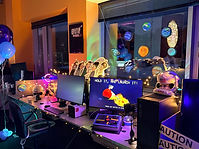
Hold It, And Launch It!
- A CMU Game Dev Project
A 3-week sprint to design and create a prototype of a two-player cooperative game of a festival-ready "rocket launch" experience. I served as the producer and experience designer, print planning, puzzle scoping, playtesting, and narrative framing while coordinating the cross-dispinary team to ensure the game was readable, funny, and reliable under real festival conditions.
Gameplay Video
Narrative
Setup
On launch day at MASA, a globally livestreamed rocket countdown is seconds from liftoff when the lead scientist is struck by a sudden, violent case of diarrhea. Forced to retreat to the bathroom—with the launch manual in hand—he must guide his assistant through the launch remotely using only a walkie-talkie. With the world watching and the clock ticking, clear communication is the only thing standing between success and total catastrophe.

Project Goal
Designing an interactive & immersive experience for the ETC Festival
Inspiration: Keep Talking and Nobody Explodes
Platform: PC, Phidgets, Xbox Adaptive Controllers
Duration: 3 weeks
Team: 2 Programmers, 2 Artists, 1 Producer


Meet the Team
MY ROLE:
-
Producer
-
Experience Designer


PRODUCER
Yuelin Liu
PROGRAMMER
Alex Li
ARTIST
Ivy Hu
ARTIST
Aiden He
PROGRAMMER
Henry Wang
Game Dev
PT. 1 The Problem
-
We needed an experience that was easy to learn, fun to watch, and reliable under constant play.
-
Pure digital games struggled to attract bystanders, so we explored a physical, asymmetric co-op format where communication itself became the mechanic.
PT. 2 The Idea
A Metaphor:
When things really matter, everything goes wrong—but teamwork gets us through.
An Absurd Story:
The ridiculous premise lowers the fear of failure and encourages players to communicate freely, which directly supports the game’s core mechanic and is suitable for a festival.
Gameplay Overview:
Players collaborate across separated roles, combining physical input devices
(rocket console) and asymmetric information (launch manual) to complete four puzzles. Success depends entirely on clear communication, coordination, and real-time problem solving.
PT. 3 Rocket Console Design
Both Digital & Physical:
Both Phidgets and XBox Adaptive Controllers can be plugged directly into Unity, letting us prototype physical interactions quickly without low-level hardware debugging.

Digital View

Physical Interface
Detailed Console Operations:
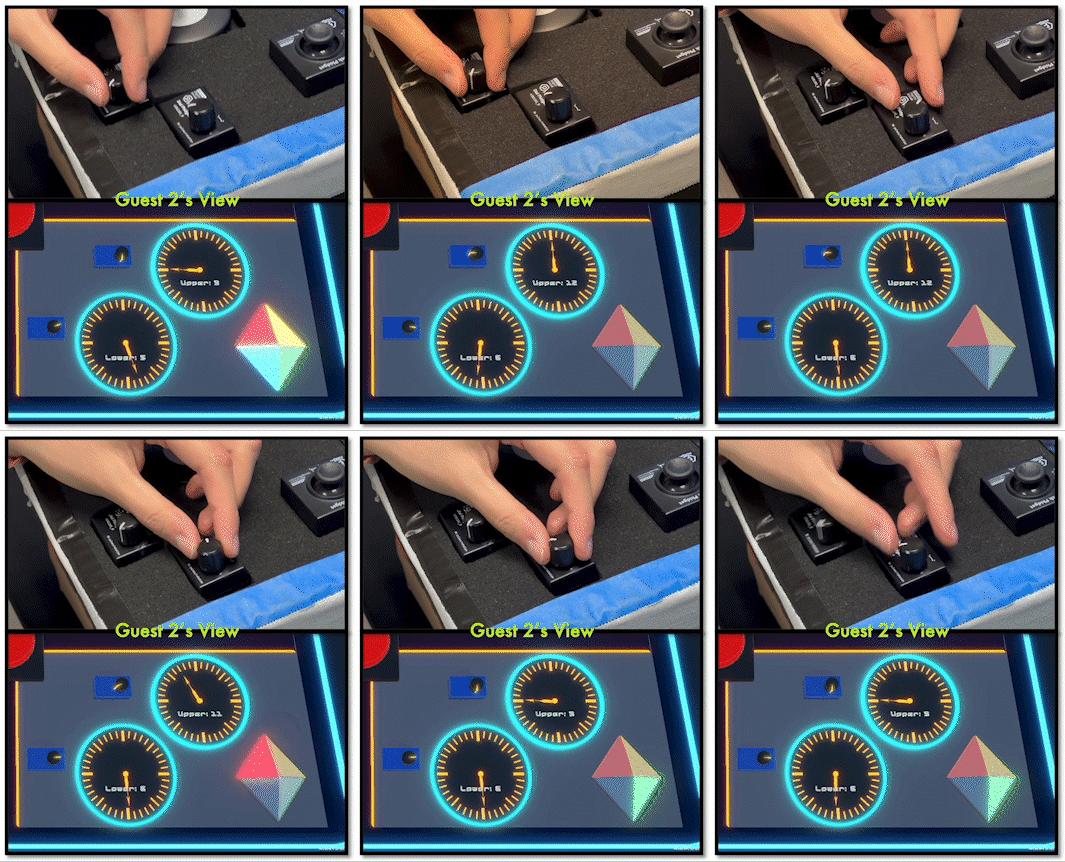
Puzzle #1
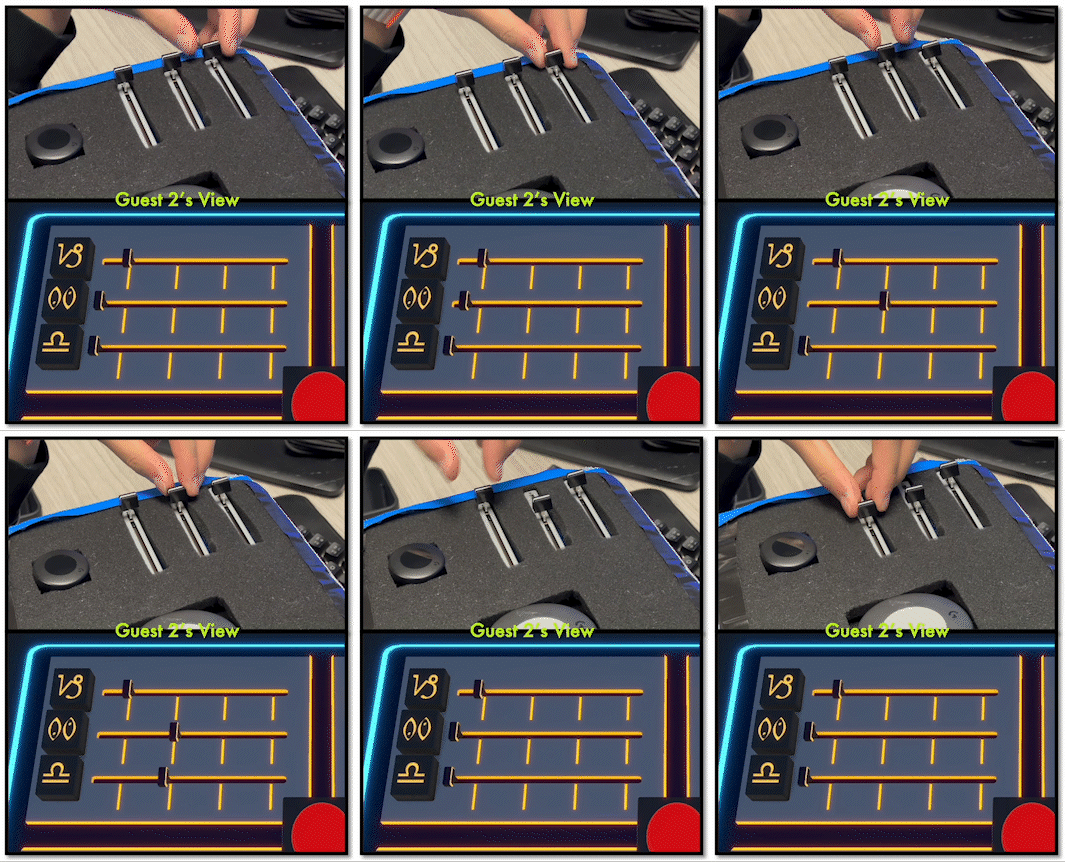
Puzzle #2
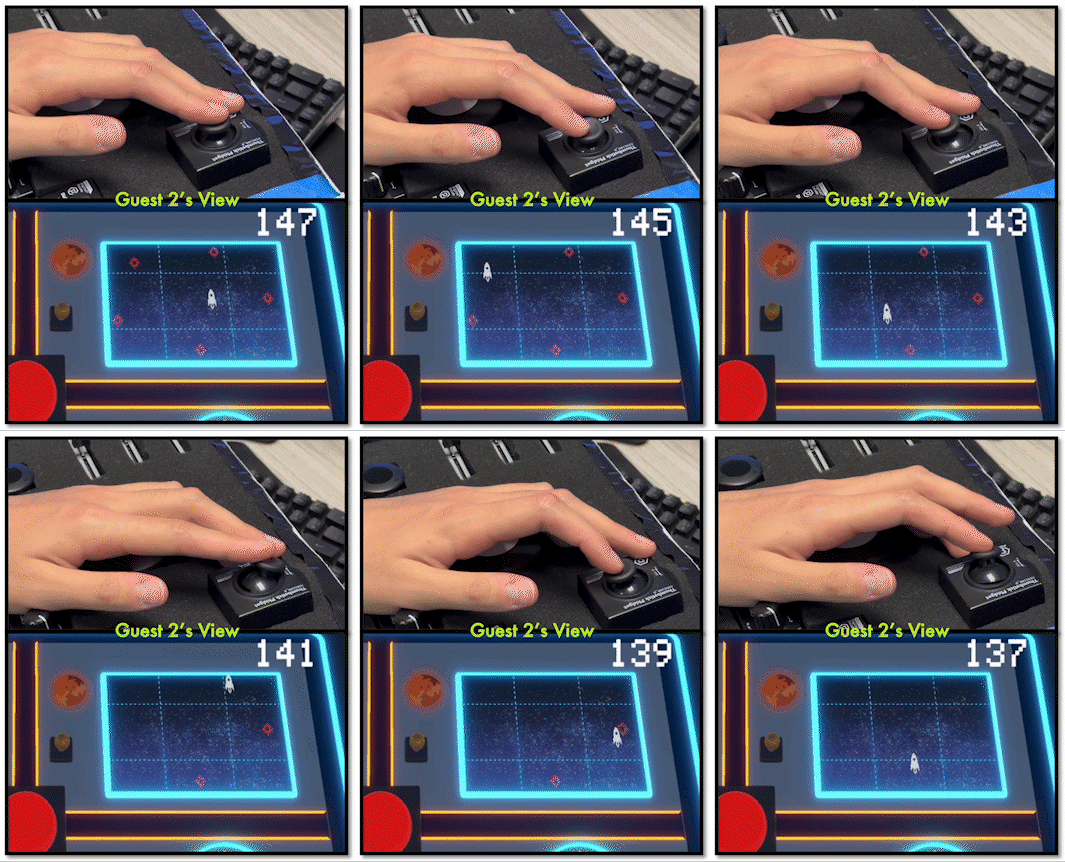
Puzzle #3
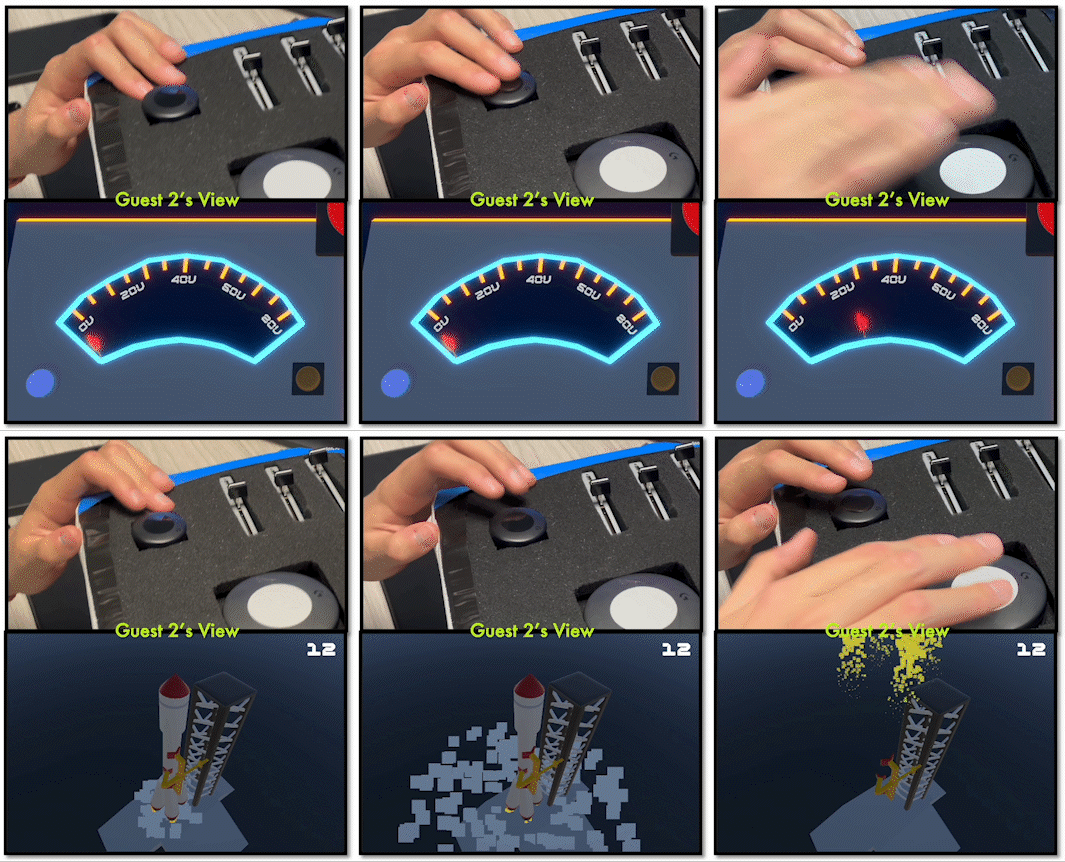
Puzzle #4
PT. 4 Rocket Launch Manual Design
From Paper to Pure Digital:
Initially, the rocket launch manual was designed as a text-heavy PDF, but constant
_Page_1.jpg)
_Page_3.jpg)
_Page_2.jpg)

playtests showed that players wouldn’t read long paragraphs under time pressure. So, the manual has been iterated to become simpler, spacial and pure digital.

The Final Manual Design:

A hologram rocket launch manual placed inside a cyber-punk style bathroom.
Production Decisions
PT. 1 Agile Workflow
-
Managed the project using Google Workspace to keep collaboration lightweight and accessible.
-
Centralized schedules, task tracking, design docs, and playtest notes in a single shared drive to reduce onboarding friction.
-
Used Google Sheets instead of heavier tools to keep the team moving fast and focused.

Google Workspace


Task Tracking Sheets
PT. 2 Sprint Structure
Led following sprint activities:
Sprint Planning
15-minute Daily Stand-ups
Sprint Reviews
Retrospectives
-
Continuously refined the product backlog based on stand-up discussions and live playtest feedback.
-
Prioritized scope control and iteration speed to maintain reliability under tight deadlines.
PT. 3 Experience Polish for Festival
-
Expanded production scope after festival acceptance to include set design, on-site setup, and player takeaways.
-
Designed small physical artifacts (e.g., mission newspaper awards) to extend the experience beyond gameplay.
-
Focused on immersion, throughput, and audience engagement in a live festival environment.
Glimpse of the Festival: