

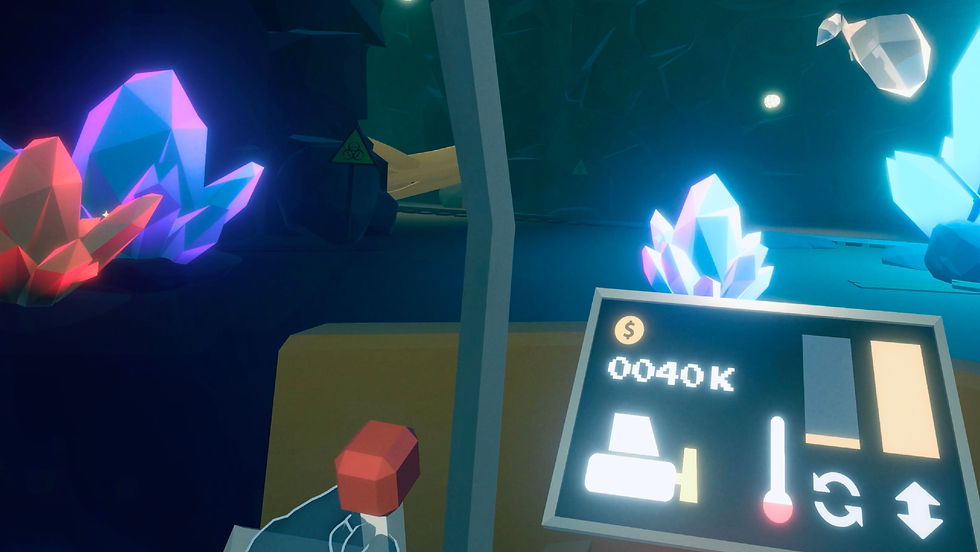
Digger Fighter - A CMU Project
(Game Dev)
A two-week game prototype aimed at first-time-friendly VR: could new players immediately understand how to operate a bulldozer? As producer, playtest coordinator, and sound designer, I set the cadence (sprints, stand-ups) and built a minimal but tight ops stack in Google Workspace, plus basic source-control etiquette (Perforce) to keep builds stable.
Gameplay Video

Project Goal
Build a VR world for a naïve guest using indirect control
Prompt: Operating Heavy Machine
Platforms: Quest 3 (standing scale), with limited physical space
Duration: 2 weeks
Team: 2 Programmers, 2 Artists, 1 Producer

Overview
MY ROLE:
-
Producer
-
Playtest Coordinator
-
Sound Designer
PT. 1 GAMEPLAY OVERVIEW
-
You’re an employee sent to a sketchy mineshaft to gather gems; zombies emerge mid-run (a reveal, not telegraphed at start). We optimized for immediate affordance: start engine → break into mine → collect gems → react to zombies → escape. Controls centered on one primary “smash” action to reduce cognitive load.
EXAMPLE GAME SCENES:
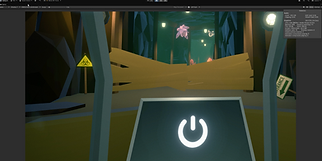
01 ENTRANCE

02 GEM & ZOMBIE
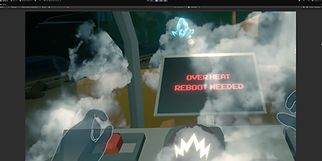
03 SYSTEM BREAKDOWN

04 EXIT
PT. 2 PRODUCTION DECISIONS
AGILE WITH GOOGLE WORKSPACE
-
Own the Google Sheet for project management.
-
All docs are organized in the same Google Drive space.

Google Sheet

Google Drive
TRIM TO CLARITY:
-
Pushed to standardize on one core verb (“smash”) for engine start, gate break, gem collection, and zombie defense—so first-timers could transfer learning.

Start Engine Button
Smash Button
PLAYTEST-FIRST LOOPS:
-
Wrote onboarding test scripts and guest behavior predictions.
-
Documented playtest observations, feedback, and future plans.

Onboarding scripts
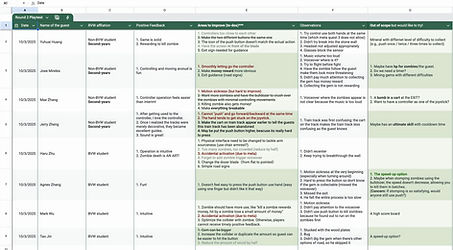
Playtest Documentation
BUG TRIAGE & SCOPE GUARDRAILS:
-
After each test, I led triage (pri/sev), batched fixes by risk, and cut lower-value flourishes to protect stability.
